These OG-107 Reproductions Are The Best Value For Military-Spec Pants
Lightweight but built well, these 100% cotton pants are also a great alternative to raw denim for those looking to change things up

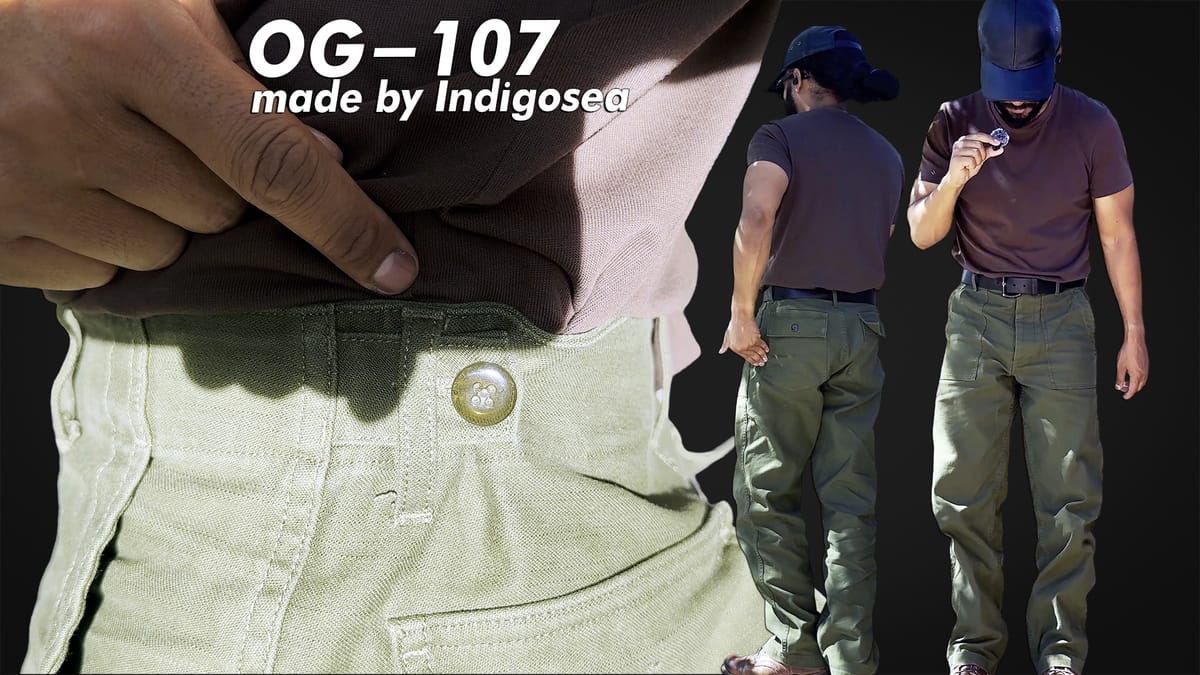
Military clothing has influenced civilian menswear for decades, but few garments have had the staying power of the OG-107 fatigue pant.
Even if you've never heard the designation before, you've certainly seen them at some point. The simple patch pockets, the straight-leg silhouette and olive-green cotton combo have become a staple everywhere — from vintage shops and military surplus stores, to fashion shops.
Many modern "fatigue pants" only borrow the look:
They might have the same pocket layout and similar color, but they're often made from entirely different fabrics that use altered proportions, and also skip many of the details that made the originals so durable and functional in the first place.
Recently, I spent some time with a pair of OG-107 reproductions from Indigosea. At $59, they're among the least expensive reproductions I've come across that actually attempt to recreate the original military specification rather than simply using the OG-107 as inspiration.
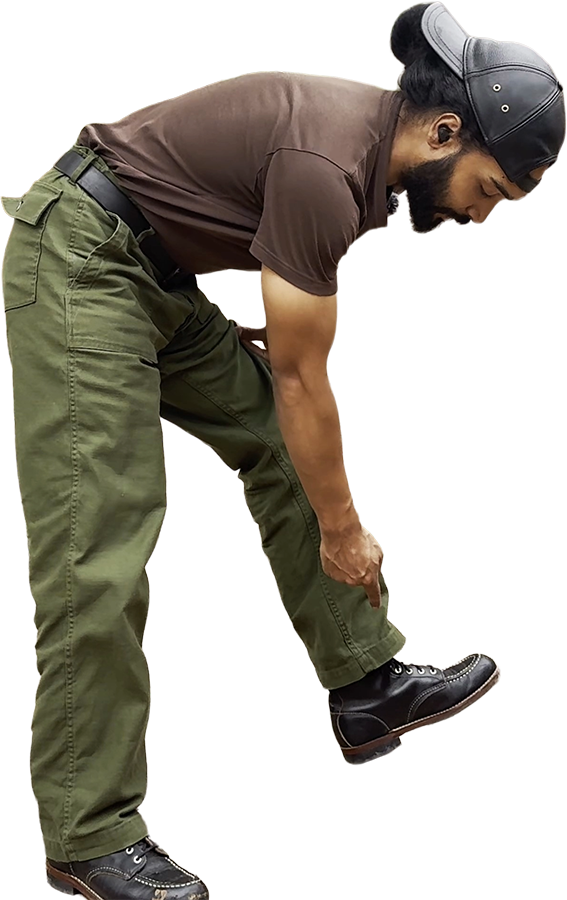
What does OG-107 mean?
OG-107 stands for "Olive Green 107," which refers to the military color designation used on the U.S. utility uniform introduced back in 1952.
The OG-107 uniform became standard issue across every branch of the United States military and remained in service for decades, seeing extensive use throughout both the Korean War and Vietnam War eras before eventually being replaced by newer uniforms (the OG-507) and camouflage patterns.
The fatigue trousers were made simple by design:
Two front patch pockets with slash openings are easy to get into, and easy to repair; the two rear patch pockets with button flaps are functional and keep important items from falling out; the straight leg accommodates big or small legs, and allows for blousing; the durable cotton sateen fabric is reversed to provide even more resilience; there's no unnecessary decoration or patches.
Just practical clothing designed to withstand hard daily use.
Fatigue-inspired vs. actual military-spec
Today, dozens of brands sell fatigue pants. Some are excellent, others are essentially chinos with oversized pockets.
What makes the Indigosea version interesting is that the company didn't simply recreate the appearance of an OG-107. They make reproductions that aim to have period-accurate military fabric and construction details.
The fabric is a mil-spec cotton sateen weighing approximately 9 ounces before washing and 10 ounces afterward. The company also states that the material follows original military finishing processes specified under MIL-C-10296:
We strictly adhere to the process of singed, desized, and mercerized as detailed in section 4.2.3(MIL-C-10296) ensuring the highest quality.
The result is a durable material that softens beautifully over time. — Indigosea LLC
That level of detail is usually reserved for much more expensive reproductions. If you look closely enough at anything in similar price ranges, you'll realize that what you're looking at isn't a repro. It's only inspired by the same design.
But with an actual mil-spec garment, you'll notice immediately the cotton sateen that's used is unique. It looks a little irregular, but in a good way.
The fabric feels substantial without being heavy too. A lot of the time with inspiration-based makes, you're going to get a heavier material. And heavier doesn't always mean better — with durability, but especially when it's hot out.
For many discerning buyers, this is the key distinction.
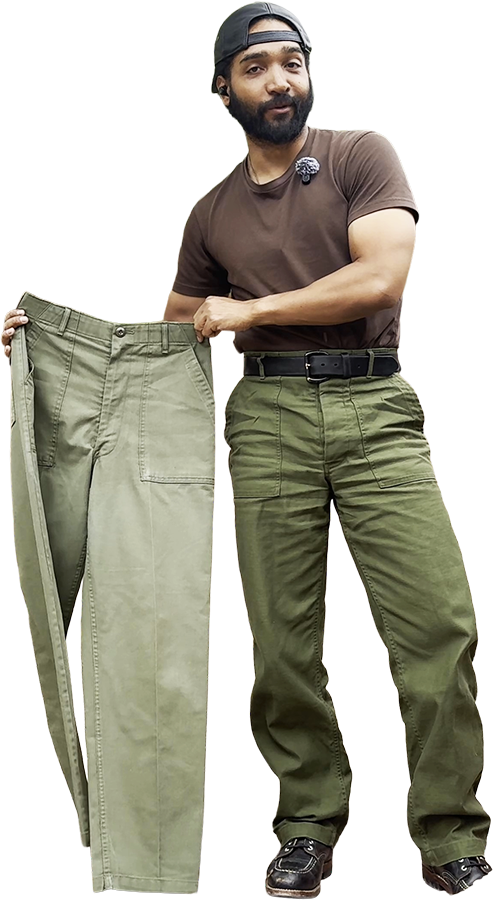
A lot of modern fatigue pants look the part. Far fewer actually feel the way vintage military trousers are supposed to feel.
Why cotton sateen matters
The fabric is arguably the most defining feature of the original OG-107.
Unlike denim, canvas, or twill, cotton sateen develops character in its own unique way: the surface gradually softens and fades, often taking on the faded, somewhat gray-green appearance associated with genuine vintage military clothing.
As the cotton sateen is washed, its weft-dominant weave softens without losing structural integrity, which is a highly important aspect for a long-lasting garment.
Since the fabric is reversed when building the pants, over time the slubby texture starts to pop even more. That's why these trousers are known to age so nicely.
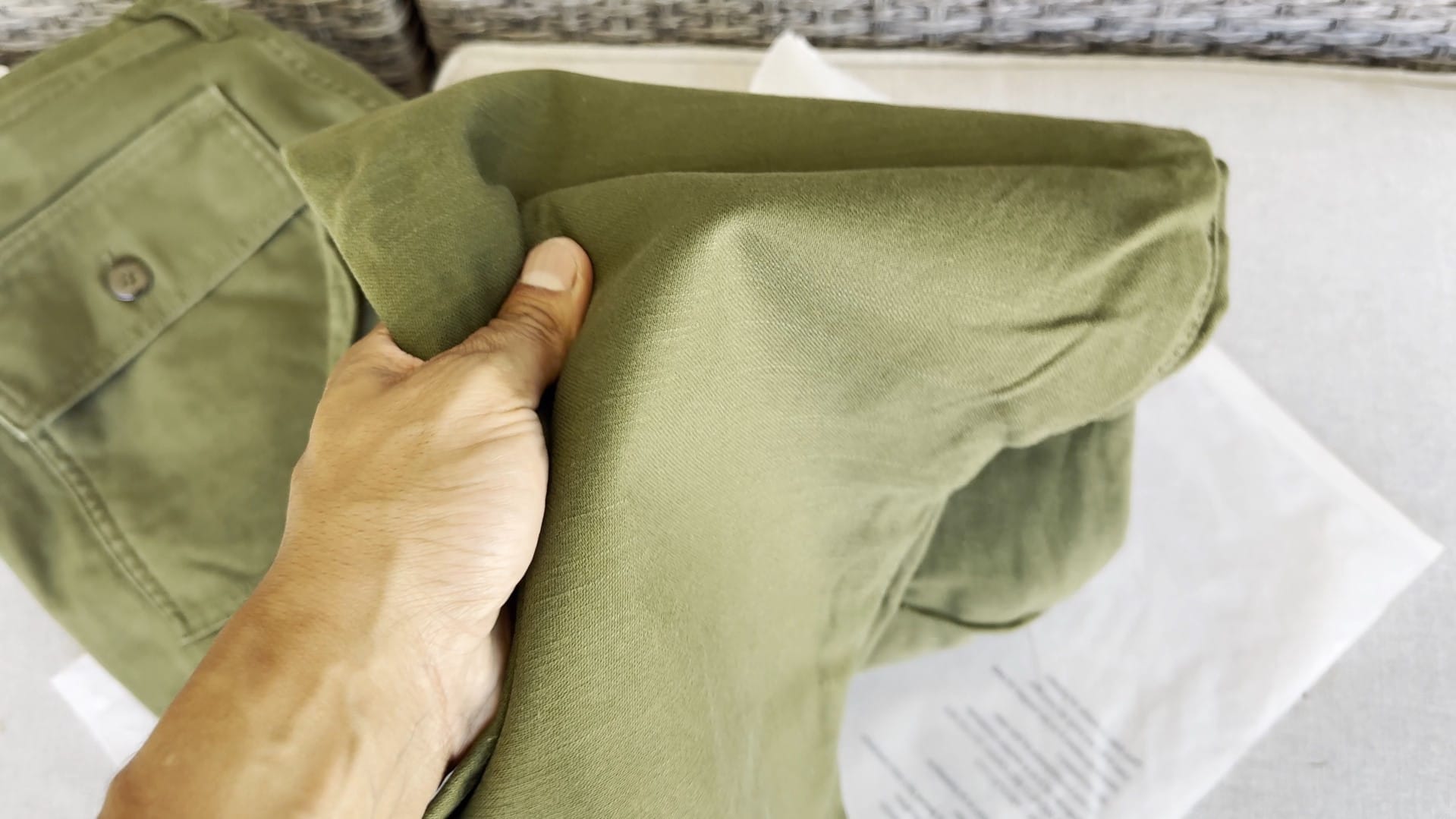
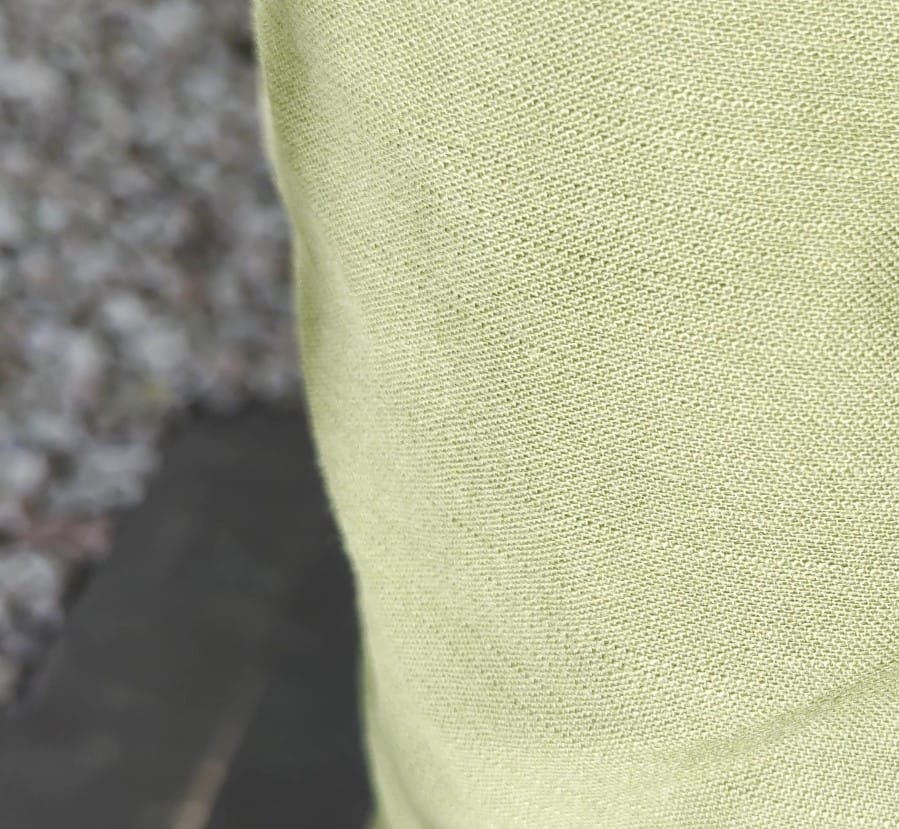
The reverse cotton sateen material up close
The OG-107 is also comfortable.
While many people might associate military clothing with stiff fabrics, OG-107 fatigues are wearable from the start, and feel better as they get worn in. The fabric breaks in without losing its structure, as stated earlier, and they're a practical alternative to jeans during warmer months.
The original Type I OG-107 pants
One aspect I particularly appreciate is that Indigosea based these pants on the earliest OG-107 pattern, the Type 1.
Type 1 trousers were produced during the early years of OG-107 production and are recognizable by details such as the rectangular rear pocket flaps and waist adjustment tabs. These are the details most seen in photographs from the early Vietnam War period.
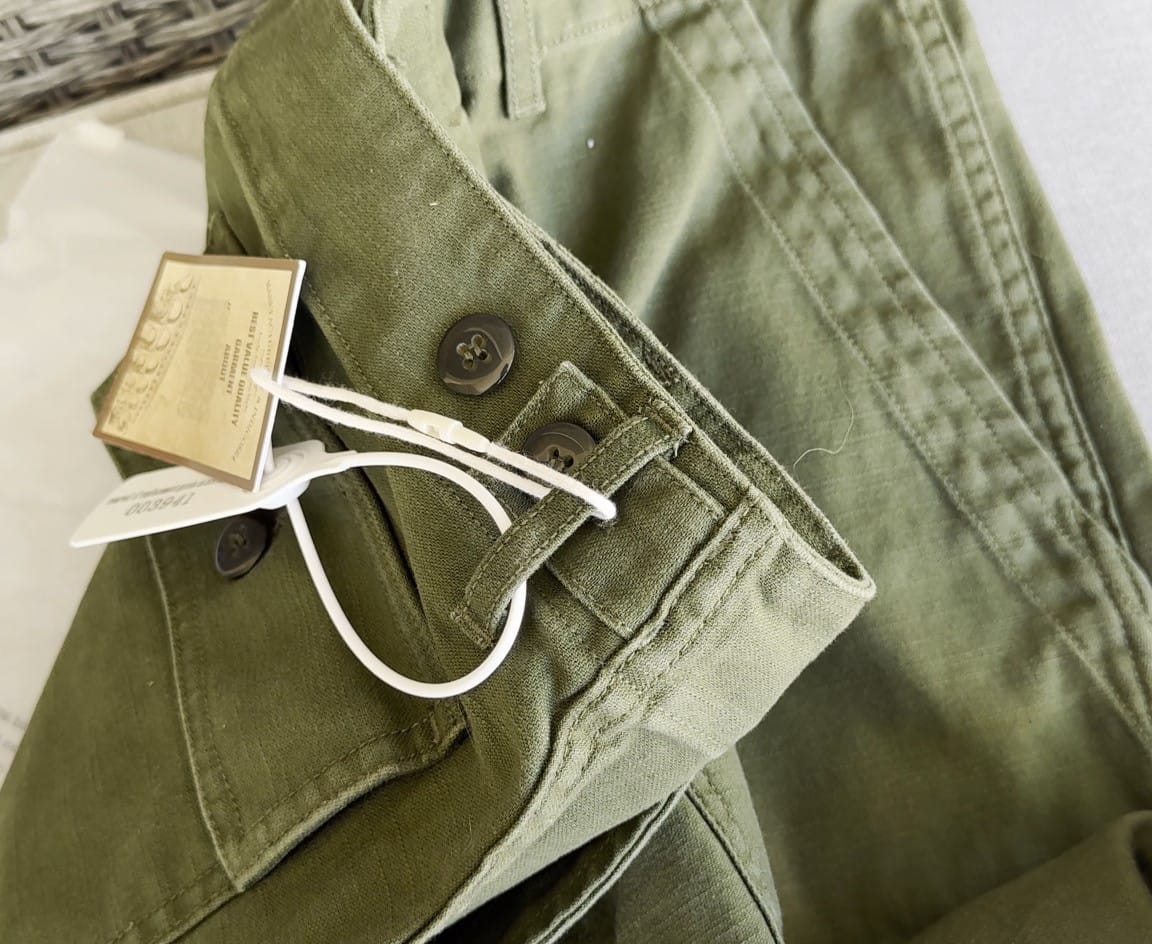
The reproduction keeps those details intact, so the sizing is naturally a little easier for buyers today.
How do the OG-107 uniform variations work?
As mentioned, OG-107 is a specific shade of color. Because this shade was standardized across decades, it spans two entirely different categories of uniforms, both of which allowed for intentional parts-swapping.
1. The utility uniforms (fatigues / baker pants)
Used for daily base work, collectors break these lightweight cotton sateen uniforms into three distinct design "Types" based on pocket shapes and cuffs (approximate years):
- Type I (1952–1963)
- Type II (1963–1964)
- Type III (1964–1975)
2. The cold-weather field uniform systems
Running parallel to the fatigues were the heavy combat systems, designated by year:
- M-1950 System
- M-1951 System
- M-1965 System
Are they interchangeable?
Yes! The US Military designed these generational iterations as a way to save on supply chain costs. Because they all utilized the identical OG-107 color palette, components within the same category were fully swappable.
For example, a soldier could officially be issued and wear heavy M-1951 Field Trousers combined with a newer M-1965 Field Jacket Shell, and remain completely within military regulations.
Does this matter for civilians who are just collecting though? Not at all, unless you're reenacting, in which case you now have a bit of the history.
Wrapping up: these are the best value OG-107?
These pants sit in a very good position within the market right now.
Many military-inspired fatigue pants cost considerably more while offering less historical accuracy. On the other hand, genuine vintage OG-107 trousers continue to become harder to source in wearable sizes and conditions.
A lot of people might say you can find vintage OG-107 all over online, but that really isn't the case unless you're willing to start spending over 100 USD — well beyond that if you want something in good condition.
That leaves us with reproductions.
At this price point, and at this level of accuracy, I think it's a no-brainer.
For someone who wants the classic OG-107 experience — the cotton sateen fabric, mil-spec construction, Type I detailing, and straightforward utility styling — these are among the strongest value I've seen.
They're not merely another pair of olive-green pants with patch pockets, trust me. I've owned plenty of those.
Buy OG-107 pants here
Affiliate links are present below. I earn commissions for qualifying sales. 🙏
 Indigosea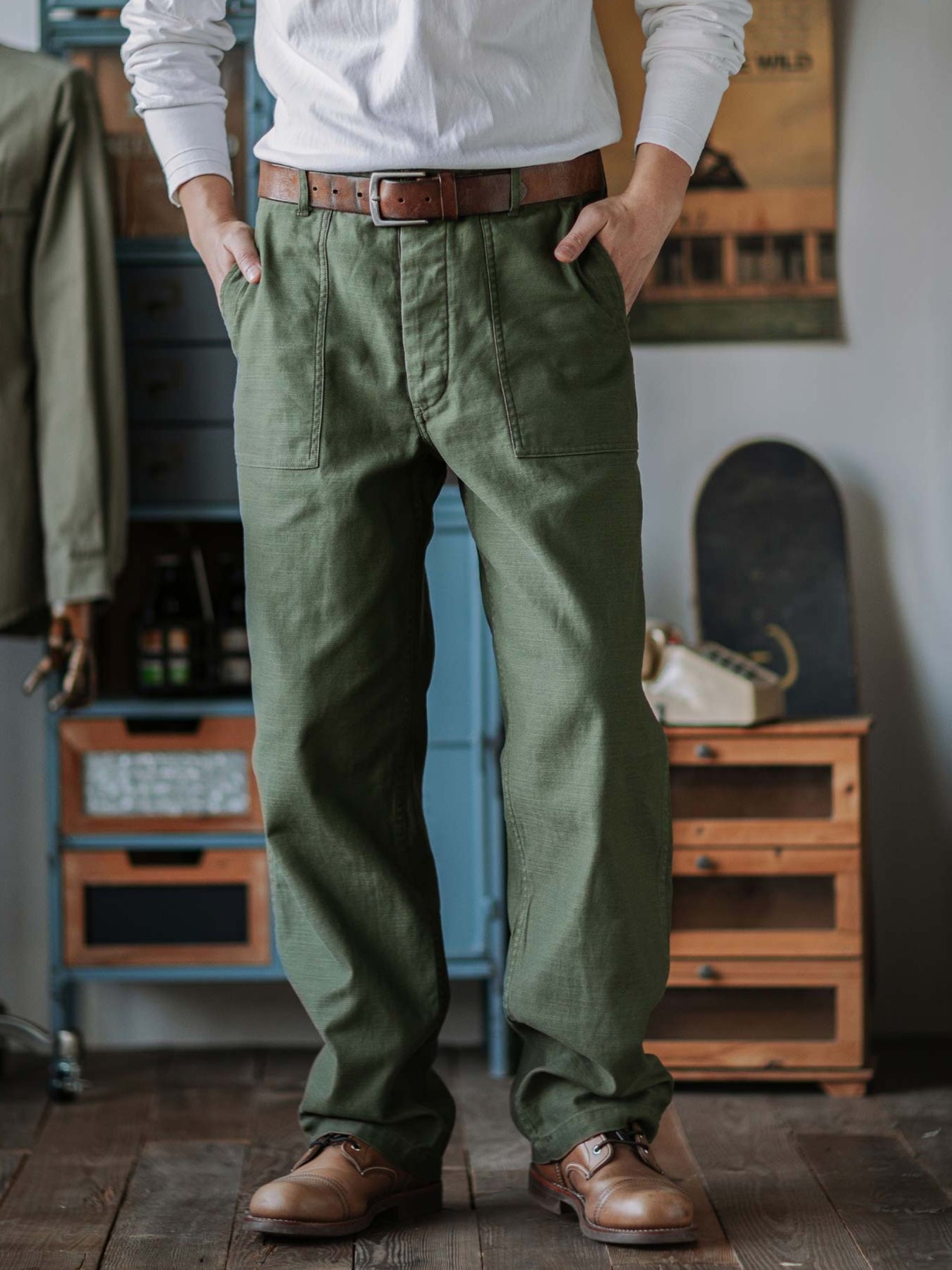
Measurements & shrinkage
Indigosea provides measurements on their website, these are simply for my own pair, for your reference:
Size 32x32 —
Waist: 16.5" (41.9 cm)
Back rise: 17.5"
Front rise: 13"
Seat: 20.5" (52 cm)
Thigh: 13" (5.1 cm)
Knee: 10.5" (26.7 cm)
Inseam: 31" (78.7 cm)
Bottom hem opening: 8.75" (22.2 cm)
Full length: 42.25" (107 cm)
Note: I'll add post-wash measurements here when I've washed the pants.
Watch the full video review
This article covers the highlights, but I published a YouTube video where I examine the fabric, construction details, fit, and how these compare to my vintage OG-507 trousers.
Leave your comment below!