Unbranded: 21oz selvedge denim made for fast, high-contrast fades
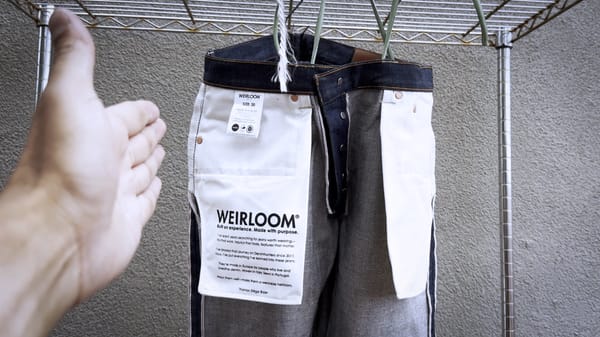
While the weft (underside) is red, these jeans will fade blue like any other indigo-dyed denim — these are a limited run, but what we go over in this article applies to their stock 21 ounce denim, the UB721, too

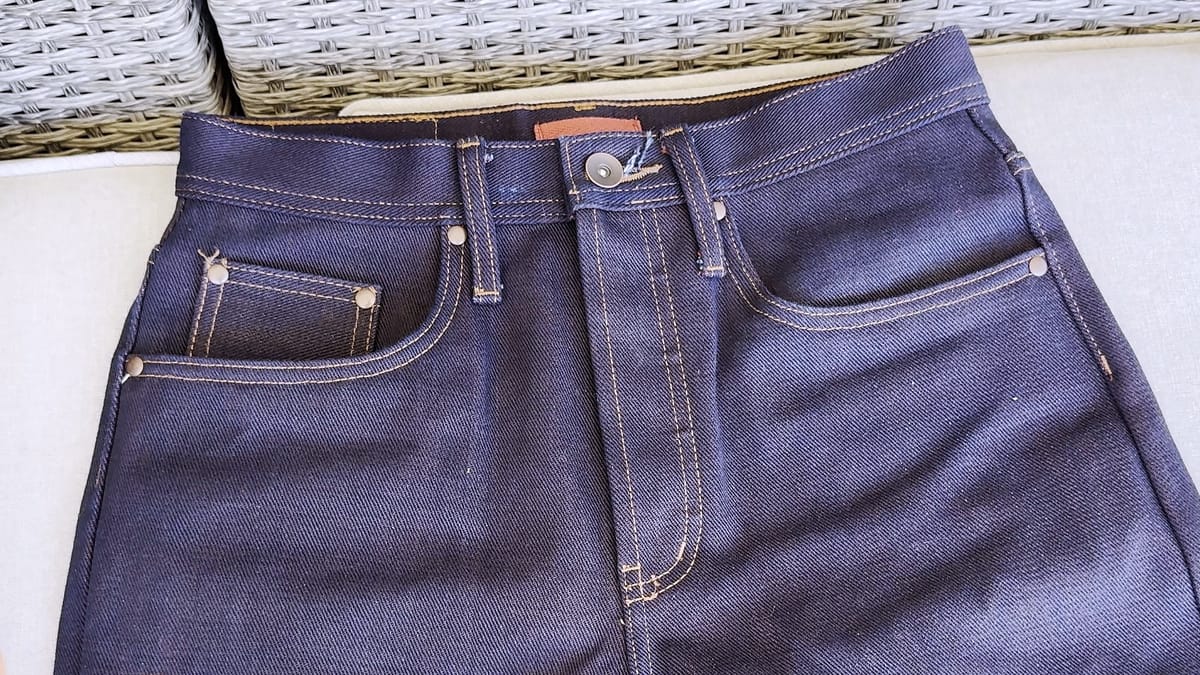
Raw denim has always lived at the intersection of patience and payoff. The heavier the fabric, the longer the break-in, but the sharper the reward.
The UB791 from The Unbranded Brand sits firmly in that category: they're 21-ounce, wide fitting selvedge jeans designed for people who want density, structure, and high-contrast fades without the distractions of branding. All at an affordable price point.
Don't mistake the $150 price tag: this isn't entry-level denim. It's heavyweight, well-constructed denim that's purpose-built for its density and visible evolution over time.
What The Unbranded Brand represents
The philosophy behind The Unbranded Brand is straightforward: remove logos, washes and storytelling fluff, and focus entirely on materials and construction. There is no arcuate on the back pockets, and no brand embroideries or logos — just raw selvedge denim in its most stripped-down, unblemished form.
The label operates under Naked & Famous Denim, a Canadian company known for producing experimental fabrics in Japan, for their unconventional denim concepts, and for making the heaviest jeans on the planet.
 Christopher Habachi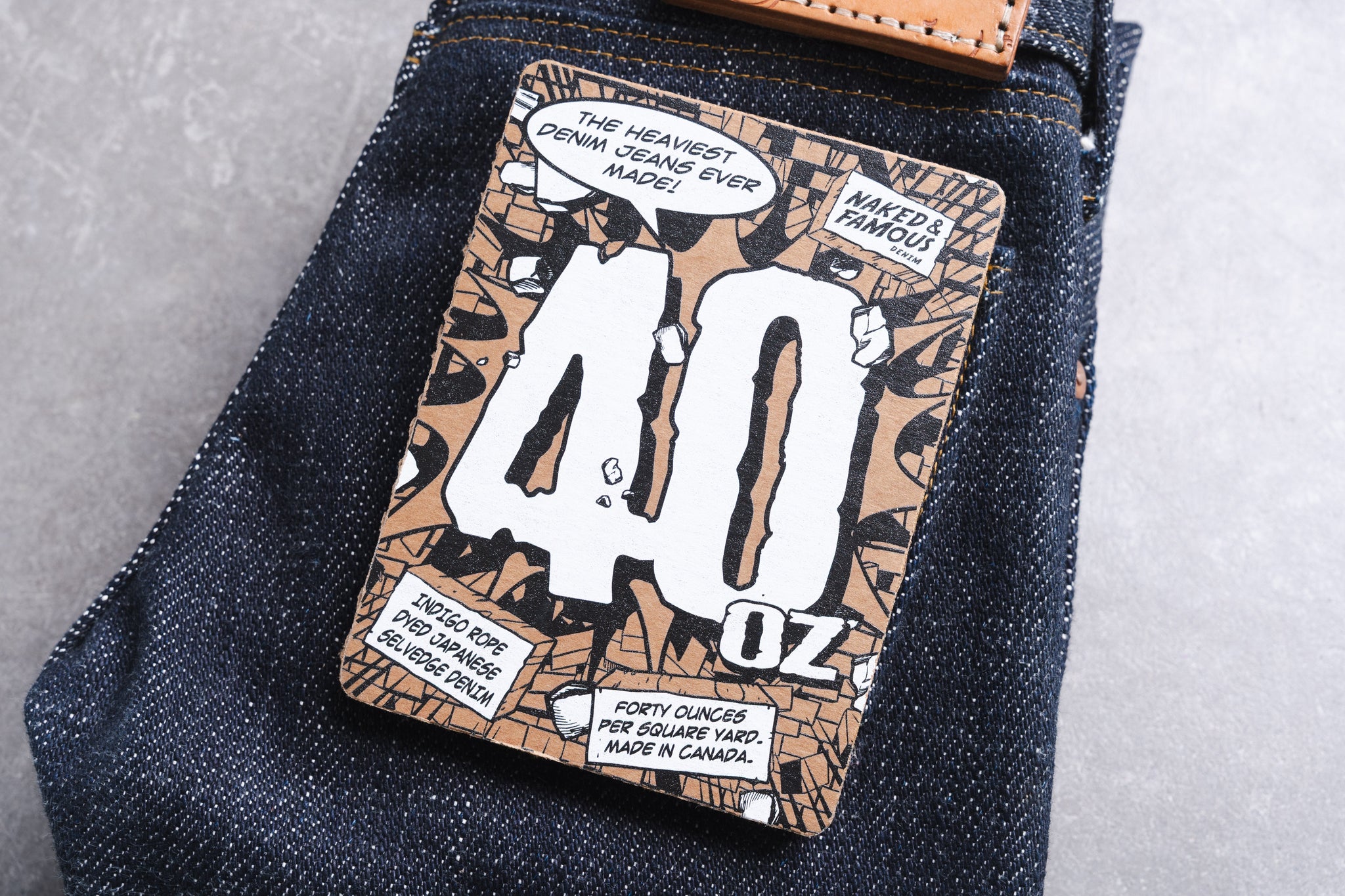
Where Naked & Famous often pushes boundaries (think glow-in-the-dark, scratch-and-sniff, cashmere jeans, and extremely slubby or neppy textures), Unbranded takes a more restrained approach: classic-leaning yet unique fabrics, less price markups, and a neutral canvas for made for fading.
That positioning matters in my opinion, and while it's a sister or sub-brand of N&F, I think Unbranded has a very natural place in the raw denim market.
Unbranded exists because there's a demand for not only heavyweight selvedge, but affordable raw & selvedge denim. They're able to produce these at the prices that they do because their products are made in China, rather than in Canada or Japan as is typical of Naked & Famous.
While the "unbrandedness" is more of a gimmick than a necessity of keeping the price low, the lack of logos is still very much welcomed by those of us that prefer not to become billboard advertisements for clothing companies. You simply get a lowkey jean or jacket that looks as good as the luxury brands.
Overview of the UB791 heavyweight selvedge jeans
Personally, I bought the UB791, which effectively translates to:
UB= Unbranded7= Wide Fit91= the type of denim (in this case, 21 oz red weft selvedge)
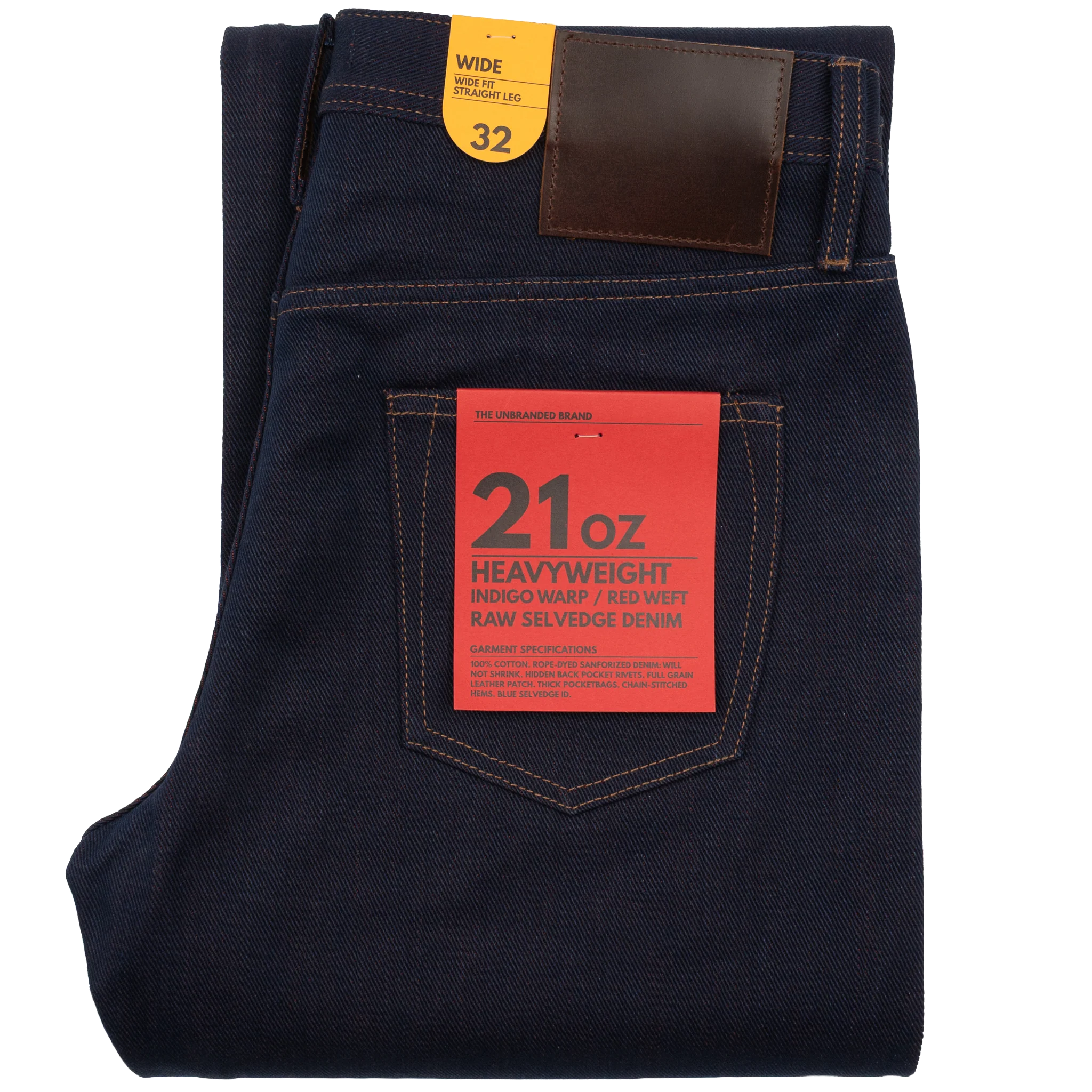
The UB791 is defined by three core characteristics:
- 21 ounces per square yard heavyweight 100% cotton denim
- A wide, relaxed fit
- A red weft interior with indigo warp exterior
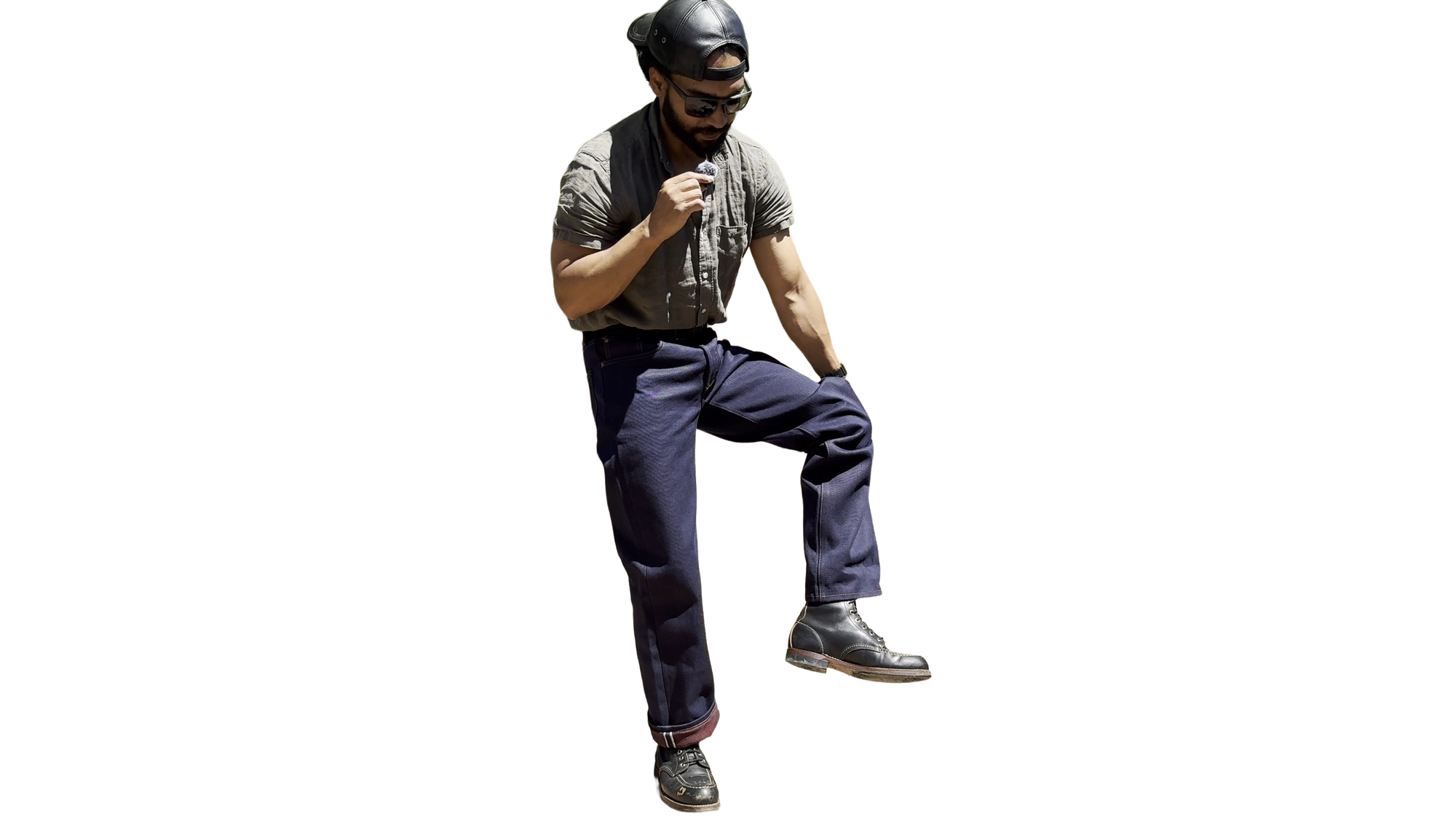
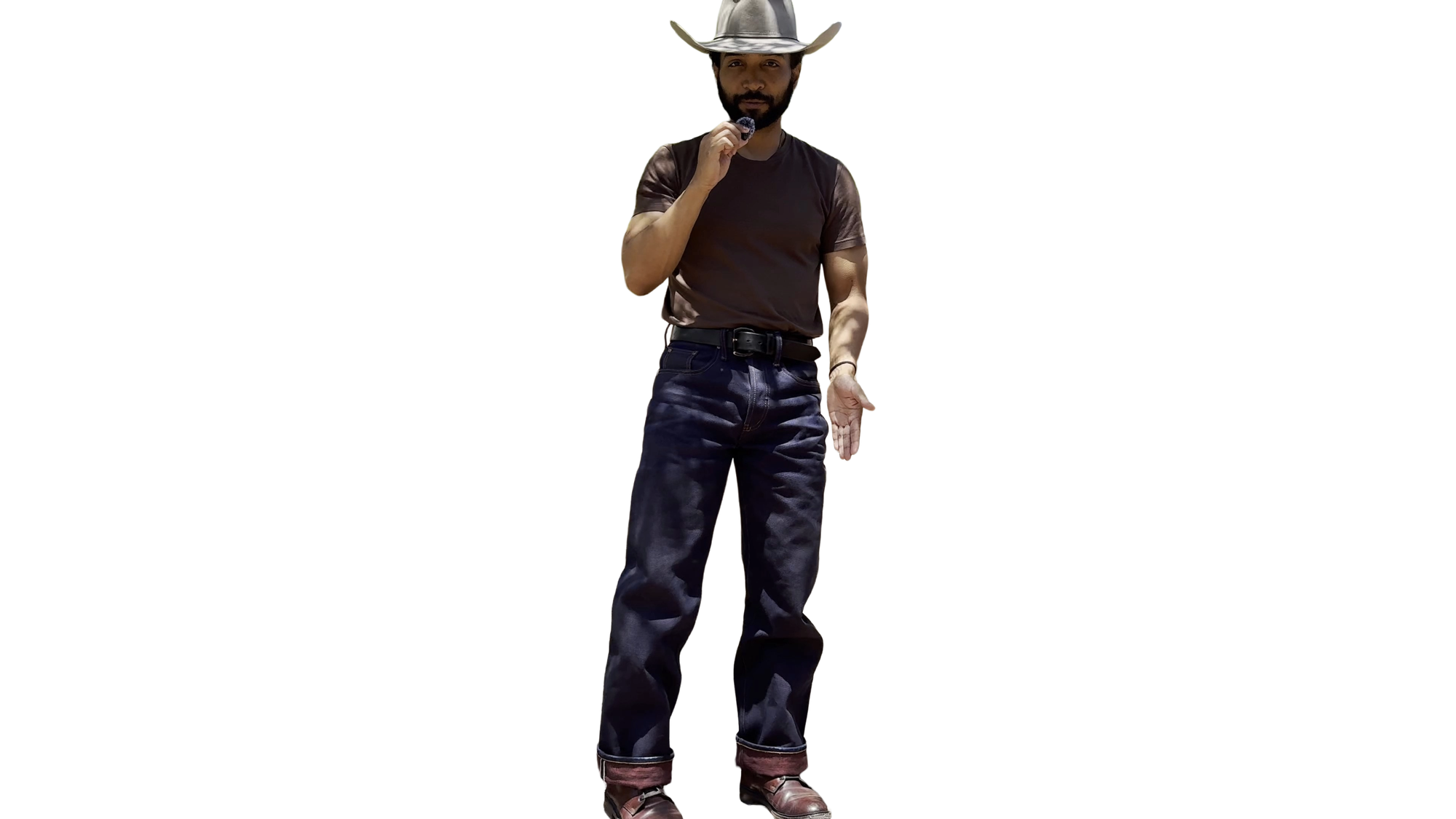
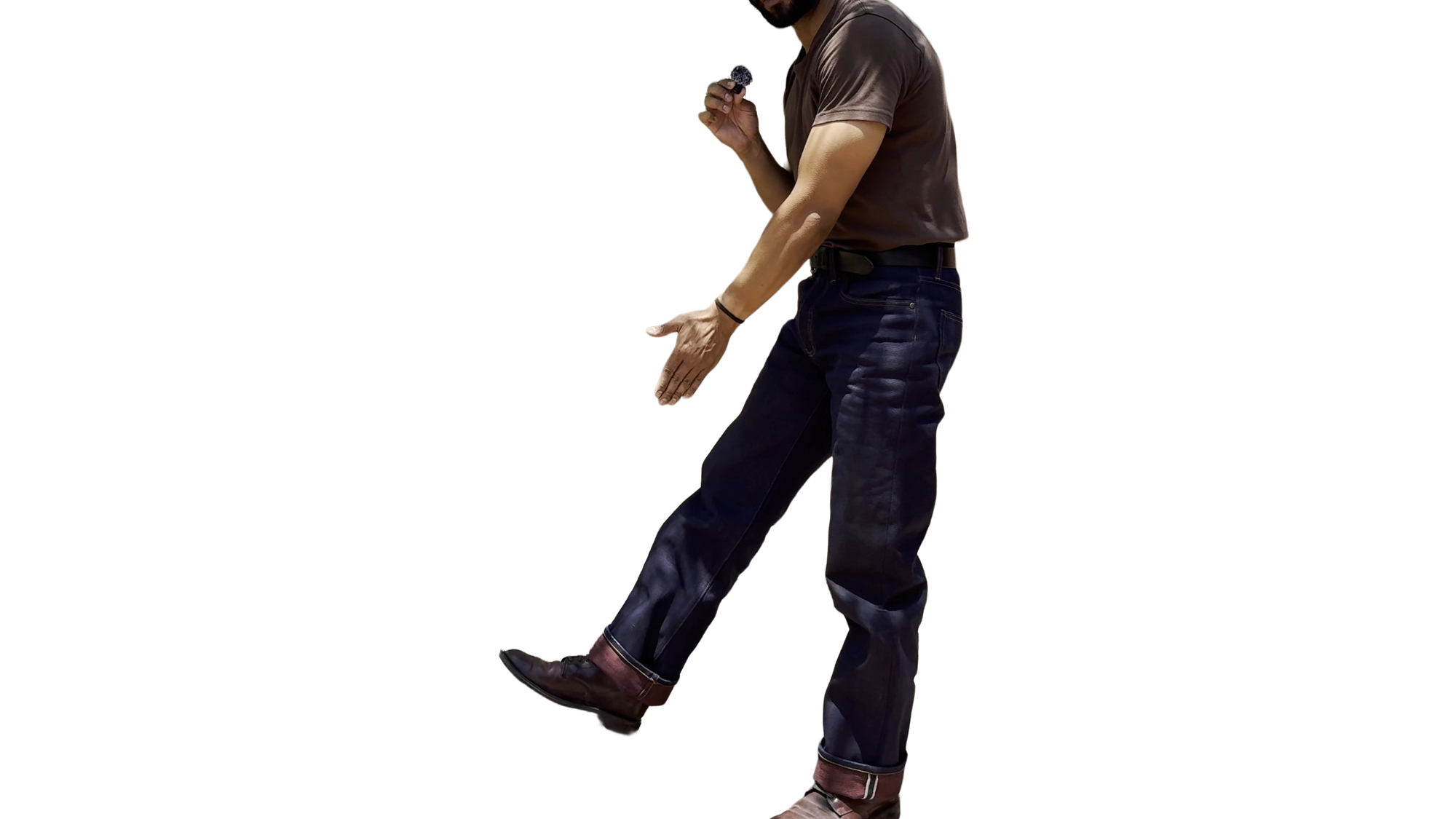
Me (Bryan), wearing my heavyweight Unbranded UB791 jeans
This combination places it in a niche that appeals to experienced denim wearers — people who already understand break-in periods and shrinkage behavior.
In fact, the tag in these jeans say they'll shrink up to 3%; I think you can push that to 5% if you really tried. I've done the same with Wrangler 13MWZ, which come in a raw, sanforized denim variant.
Construction notes
- Fabric weight: 21 ounces per square yard (significantly heavier than standard 11–14oz denim)
- Selvedge ID: blue-ear
- Hidden back pocket rivets; all five pockets use rivets.
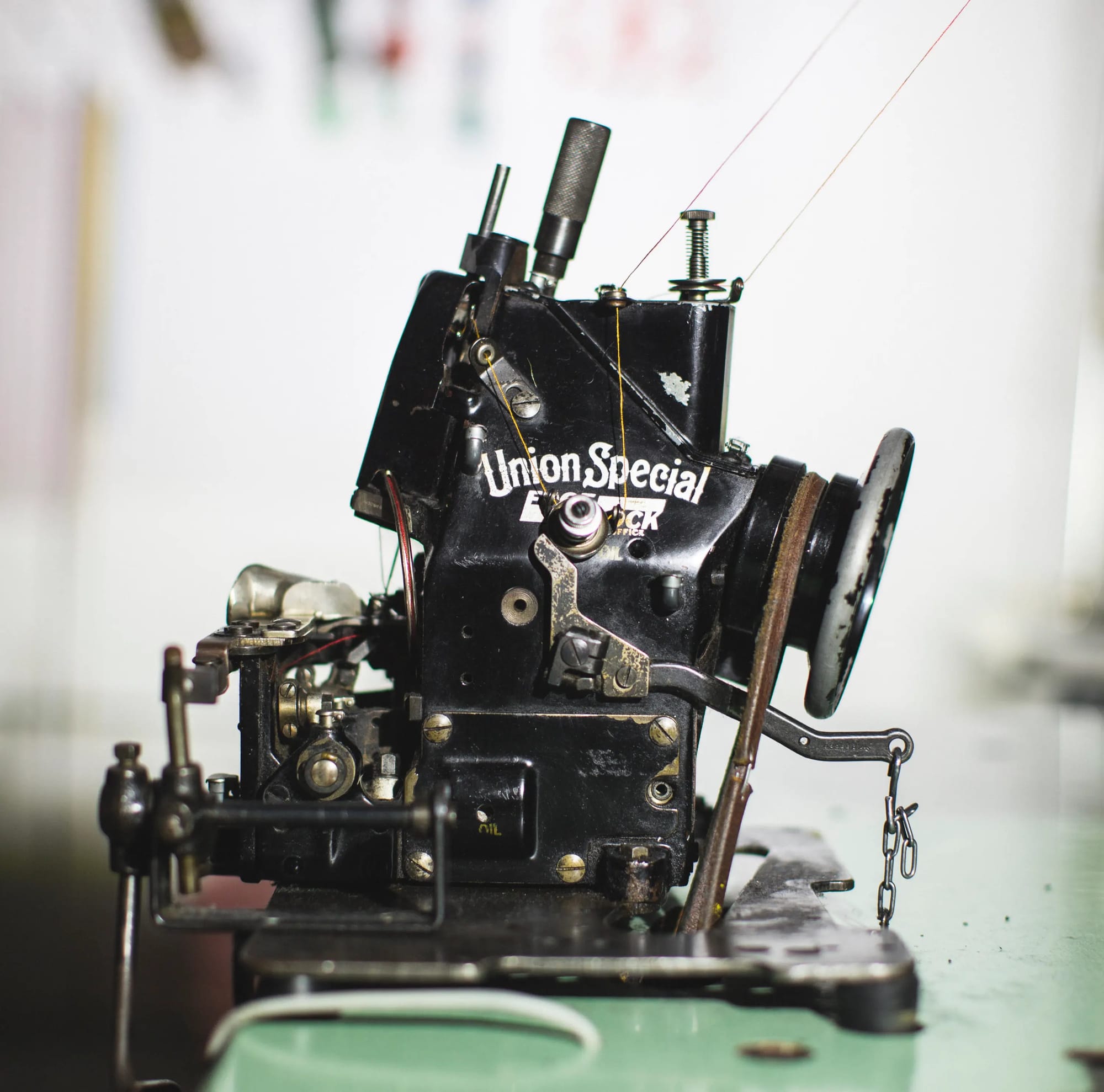
- Chain-stitched hem using Union Special machine
- Core fade behavior: not red-core; fades expose white cotton core
That last point is critical and often misunderstood. If you expect the jeans to fade red, you'll be disappointed. However, Naked & Famous has sold red-core jeans:
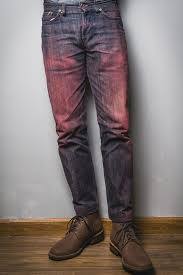
Personally? I prefer traditional lightning-blue fading from natural white cores, where the cotton is not dyed through using another color.
Finding your size in Unbranded jeans
Be sure to read the sizing chart for any model of jeans you're looking at purchasing, particularly when looking at different fits (skinny, straight, wide, etc.) and even different materials (14.5 oz vs. 21 oz, etc.).
I have a 31" waist at the time I'm writing this, so I purchased the size 29. I haven't fit into size 29 jeans since I was a teenager, but these measure at 31.5", giving me ample room and even allowing for slight shrinkage of the raw material.
| TAGSIZE | 28 | 29 | 30 | 31 | 32 | 33 | 34 | 36 | 38 | 40 |
| WAIST | 30.5" | 31.5" | 33" | 34" | 35" | 36" | 37" | 39" | 40.5" | 42" |
| FRONTRISE | 11.75" | 11.75" | 12" | 12.25" | 12.25" | 12.5" | 12.5" | 12.75" | 13" | 13.25" |
| BACKRISE | 15.25" | 15.25" | 15.5" | 15.5" | 15.75" | 16" | 16" | 16" | 16.25" | 16.75" |
| THIGH | 12.25" | 12.5" | 12.75" | 13" | 13.25" | 13.25" | 13.75" | 14.25" | 14.75" | 15.25" |
| KNEE | 10" | 10.25" | 10.5" | 10.75" | 10.75" | 10.75" | 11" | 11.75" | 12" | 12.5" |
| LEG OPENING | 9.5" | 9.5" | 9.75" | 10" | 10.25" | 10.5" | 10.75" | 11" | 11.25" | 11.75" |
| INSEAM | 33" | 33" | 33" | 33" | 33" | 33" | 33" | 33" | 33" | 33" |
Don't base your jeans size exclusively off the waist, however: you'll want to ensure things like the thigh measurement fit you too. This won't be an issue with wide fit jeans, but virtually any other type of fit, I personally have to look at the thigh measurement. If it's too small, I size up in the waist to accommodate my thighs.
Most people don't have thigh-room issues when dealing with straight cuts and athletic fits, but you should have a good idea of your own thigh room needs based on what you've worn in the past.
Don't know your size based on the charts?
The best thing to do is to grab a pair of your favorite fitting pants and measure the same way that Unbranded does their measurements.


Unbranded's Official Measurement Guide
Red weft vs red core: how jeans actually fade
There is a clear distinction between red weft denim and red core denim, and the UB791 falls firmly into the former.
- Red weft: the horizontal yarns (inside of the fabric weave) are dyed red. This affects the interior appearance and subtle tones on the exterior.
- White core: the warp yarns are indigo-dyed around a white core (the cotton), meaning fades will reveal light blue and white, not red.
This contrasts with certain experimental fabrics from Naked & Famous, where the yarn core itself is dyed red. Those jeans fade to red on the exterior surface as the indigo wears off.
For the UB791 specifically?
You get the visual interest of a dark red interior, but the fade trajectory remains traditional to what people know — high contrast, blue-to-white evolution. The less you wash the jeans, the higher the contrast will become over time because the denim with more indigo will continue to retain it, and the high pressure spots won't.
Unbranded's "fast-fading" denim claim
Unbranded's 21 oz jeans, both the core stock UB721 and the limited UB791, is marketed as a fast-fading denim, which is notable because heavyweight denim takes the longest to break in, creating somewhat of a balance.
Typically,
- Heavier denim = slower fades due to density
- Lighter denim = faster fades due to less resistance
So how does a 21oz fabric fade quickly? It comes down to:
- Dye saturation and application method
- Surface friction behavior
- Yarn characteristics (hairiness/smoothness, irregularity, weave tension)
If the indigo sits more on the surface of the yarn rather than penetrating deeply, it will shear off faster with wear, producing visible contrast earlier in the garment's lifecycle.
This is something best verified over time through real-world wear; documenting that process, especially through consistent lighting and controlled comparisons, will determine whether the claim holds up beyond initial impressions. And honestly, it's already kinda been done and proven.
Here's just one example of the 21oz indigo jeans from Unbranded:
Why heavyweight denim matters to people
Heavyweight denim isn't necessarily casual. It changes how the garment behaves from day one, making it something you should think about well before making a purchase.
Unbranded's heavyweight denim might be really affordable, but sitting at around $150, it's not cheap.
Many people buy into heavyweight denim thinking it'll be perfect on their motorcycle, or they're just so into jeans that they think "more is better."
Splished is about functional fashion: what works for you in your life, under your life circumstances and how you live it.
More isn't better in the case of heavyweight denim.
In fact, you can make the argument that heavyweight denim is slightly less durable than midweight denim; since the material is so thick, it has less places to go, causing more friction and pressure, which produces small tears that turn into holes over time.
There are exceptions to this, like opting for wider cuts, but ultimately adding more cotton doesn't necessarily make something last longer. We could argue what longevity actually means without first having set a baseline, but I digress.
What you'll notice immediately with heavyweight denim
- Its rigid structure: the jeans hold shape and resist drape early on
- Their limited mobility, especially in the first 1–2 weeks of wear
- Their ability to retain heat: heavier fabrics trap more heat, making them seasonal; wider cuts may help to alleviate this as they allow more airflow
- The break-in: the fabric creases and softens over time, and the contrast between start and end (once fully broken in) can be much more noticeable than with lighter weight denim
Why enthusiasts love heavyweight denim
- Sharper fades: Deep creases lead to higher contrast whiskers around the crotch and honeycombs at the back of the knees
- Thicker yarns resist crotch blowouts longer, particularly when seated on bikes and when squatting down. This isn't contradictory to the section above, where we discussed tears/holes forming from friction, as crotch blowouts happen due to force from tension more so than friction over time (but it is both)
- Visual presence: the fabric has weight and depth that lighter denim lacks
There's also a psychological component: heavyweight denim demands commitment. The break-in becomes part of the ownership experience, not just a phase to get through.
Construction details and selvedge material
As expected from Unbranded, the construction is clean and functional:
- Self-edge finishing for durability and visual appeal when cuffed. Selvedge is loomed on vintage shuttle looms that produce denim much more slowly than modern day practices, increasing its value and demand from enthusiasts.
- Chain-stitching on hems for roping effect over time. While not inherently an important detail for durability, the chainstitch is beloved for its aesthetic, and for the fact that it's done on yet another vintage machine, the Union Special 43200G
- Reinforced stress points (copper rivets & bar tacks)
- Minimal branding—just a plain full grain leather patch without logos
The absence of branding keeps the focus on the fabric itself, which I think a lot of us tend to appreciate, because it becomes a garment that you make your own — through how you use it.
Once the denim is beat to crap and looks its best? It's not a brand being given the credit for the fading, it's just the jeans speaking for themselves, through you.
Who the UB791/UB721 is meant for
These wide-fit models are best suited for:
- People already familiar with raw denim care and break-in
- Anyone specifically seeking heavyweight (18 oz+) denim
- Those who want traditional fades with a unique interior detail
- Wearers interested in documenting long-term fade evolution using a fast-fading material
The wide fit selvedge from Unbranded is less suited for:
- First-time raw denim buyers (go lighter, like 14.5 oz)
- Hot, humid climates without cooler/drier seasons
- Anyone expecting immediate comfort out of the box. The wide fit will technically be the most comfortable of all of the fits, but this point comes down to the raw, heavyweight material itself.
Buy Unbranded Brand jeans:
Affiliate links, Splished may earn commissions for qualifying clicks or sales.
 The Unbranded Brand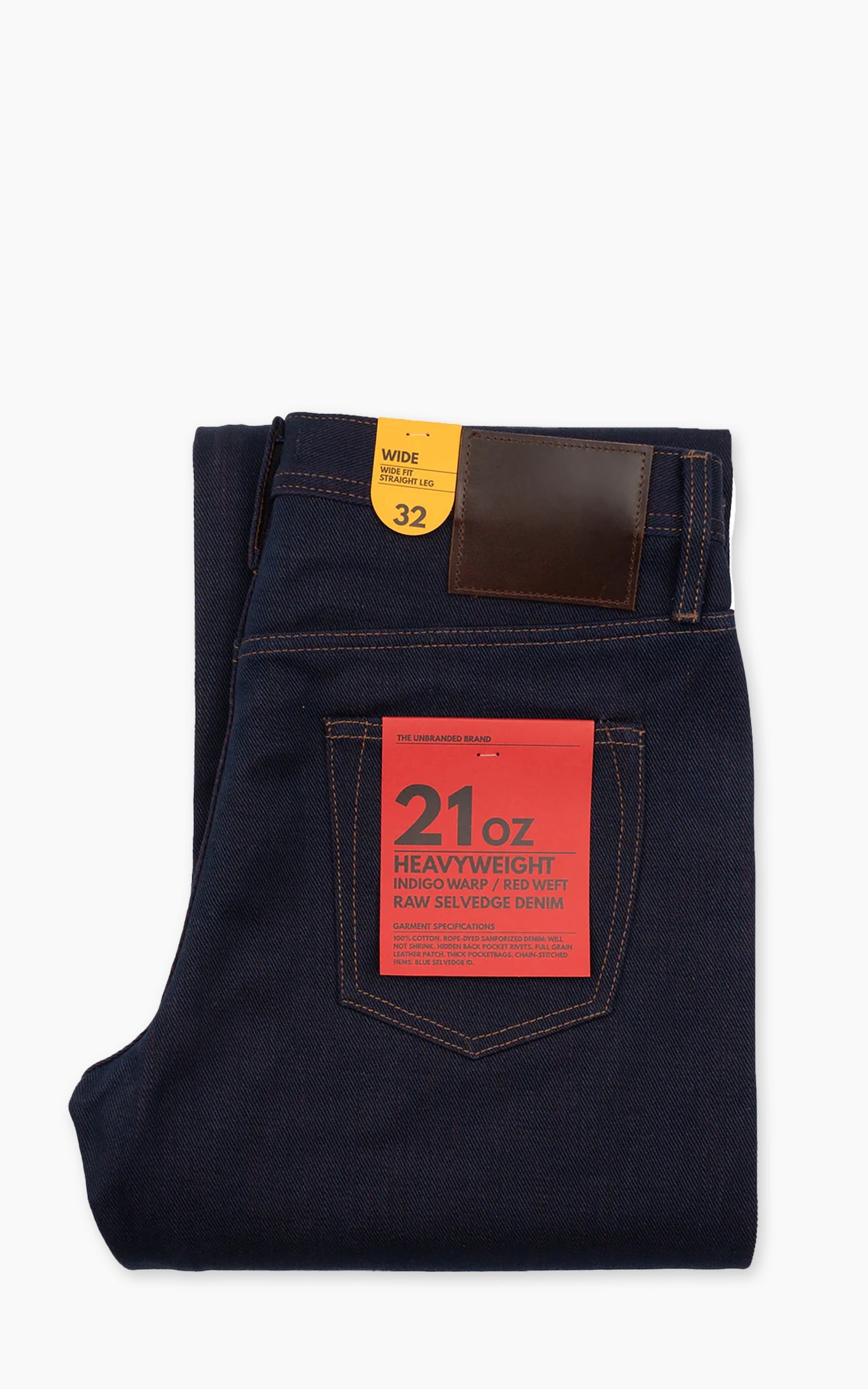
 The Unbranded Brand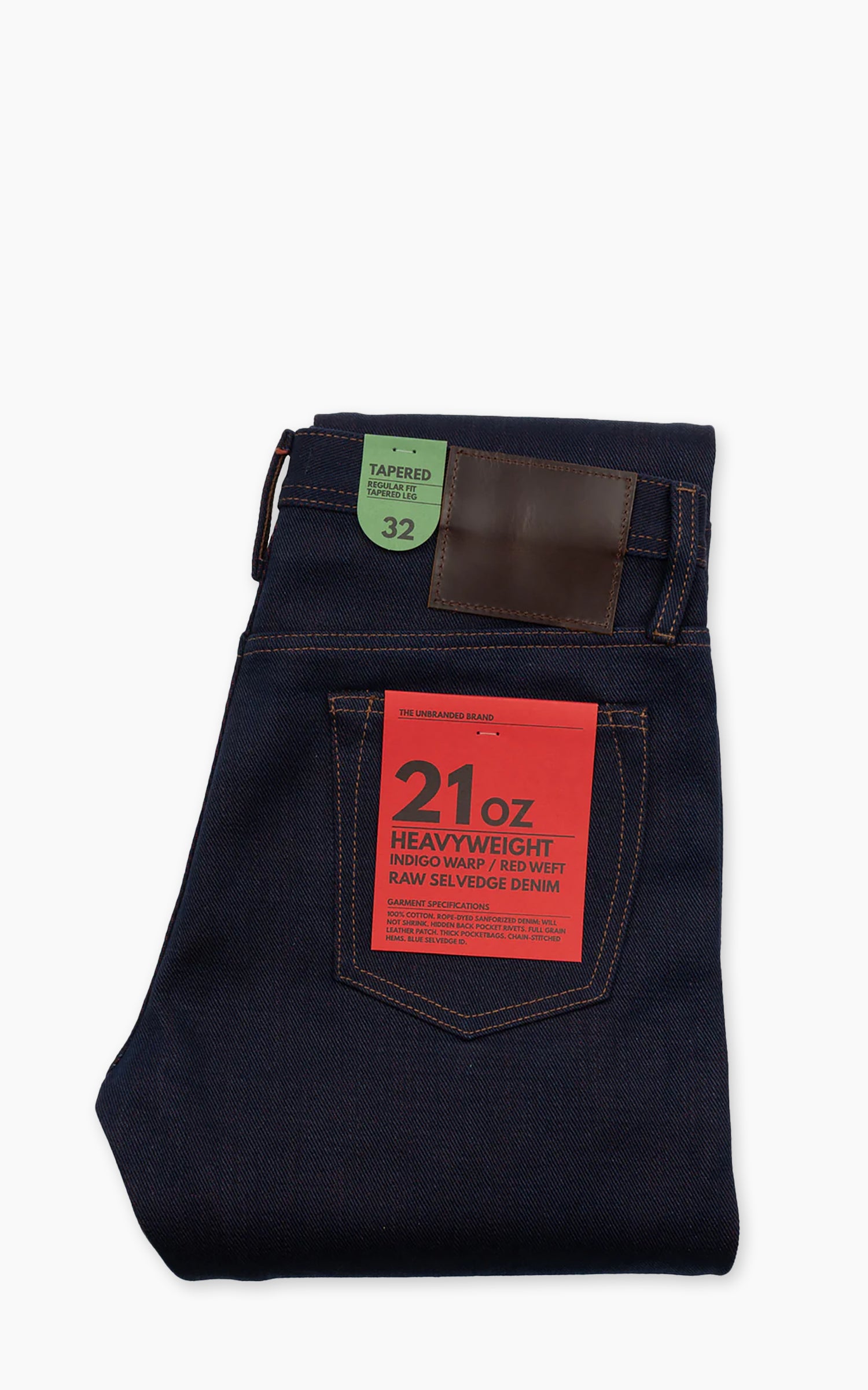
Or even check eBay, where I bought mine for only $85!
Closing thoughts
The UB791 (and their standard stock UB721) represents a focused execution of heavyweight, raw selvedge denim without any unnecessary narrative.
With the red weft pair I bought, it takes a proven formula with its indigo warp, natural cotton white core, and structured fabric, then combines just enough variation using the red, making it distinctive without significantly altering the fundamental fade outcome that the UB721 gives.
Having heavyweight denim that doesn't cost an arm and a leg, and is made by the same people making some of the best denim garments in the world... this one's hard not to praise.
And of course, none of this post was sponsored, I just like to yap about this stuff. I think they call it passion.
Oh, and I'll be breaking these jeans in through the summer because I'm definitely one of those denimheads now, I guess.
How about you? What heavies do you have, or what are you looking at buying? Jackets, jeans, or something in between? — Bryan