Everything About the Wrangler 13MWZ
Cowboy cut jeans patterned so well that it makes everybody look good in them

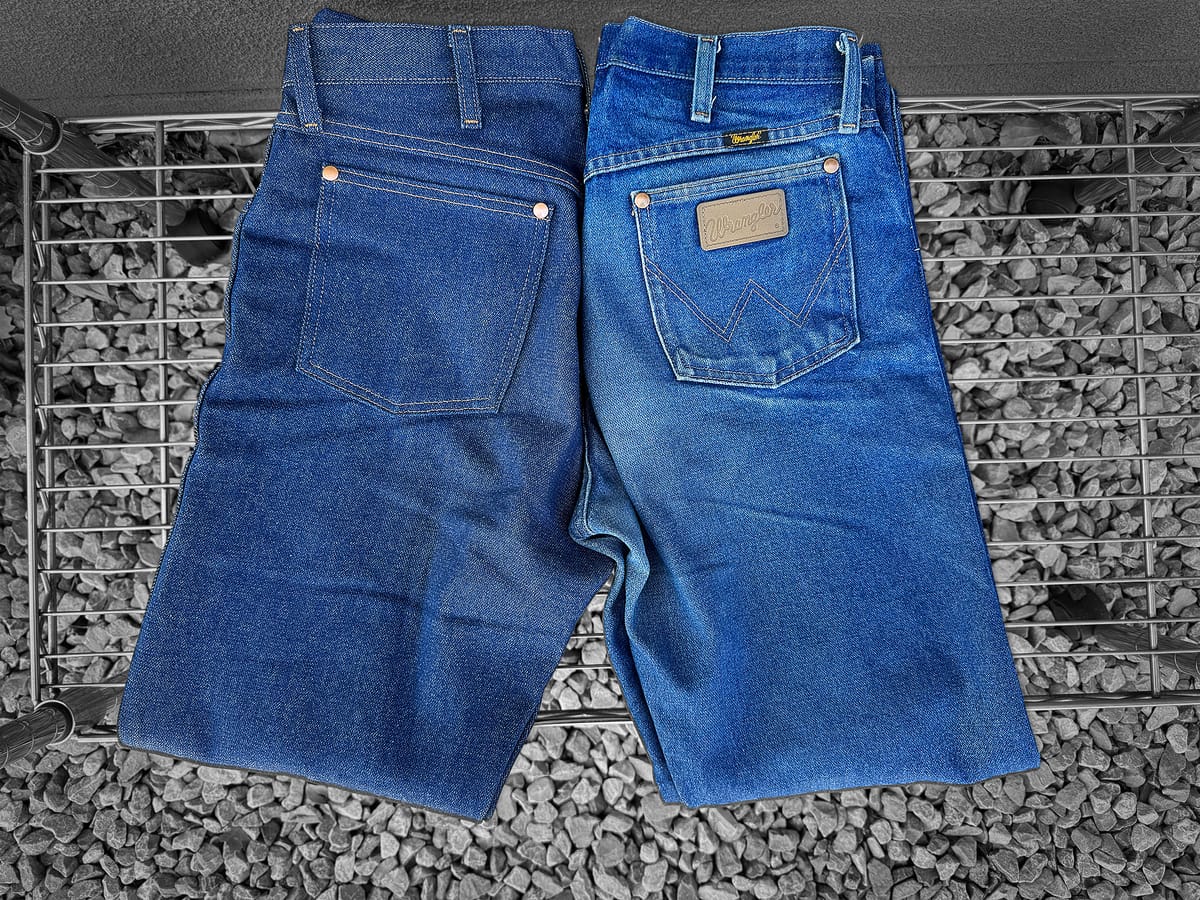
The Wrangler 13MWZ is one of the longest-running, most consistent denim jean models still being produced today. Originally introduced in 1947 as part of Wrangler's early cowboy-focused lineup, the 13MWZ was designed with a purpose: durability and function in the saddle, and around the ranch.
That intent from way back then defines the jeans even now; when you need a reliable, good-looking pair of pants that can take you through the variable places life takes us, that's where Wrangler's 13MWZ will truly shine — just about everywhere.
Many different models and patterns have come and gone, or have been heavily modified to fit modern trends, but the 13MWZ has remained largely unchanged. That consistency over time is why it has found itself a steady spot in modern heritage, workwear, and functional fashion wardrobes.
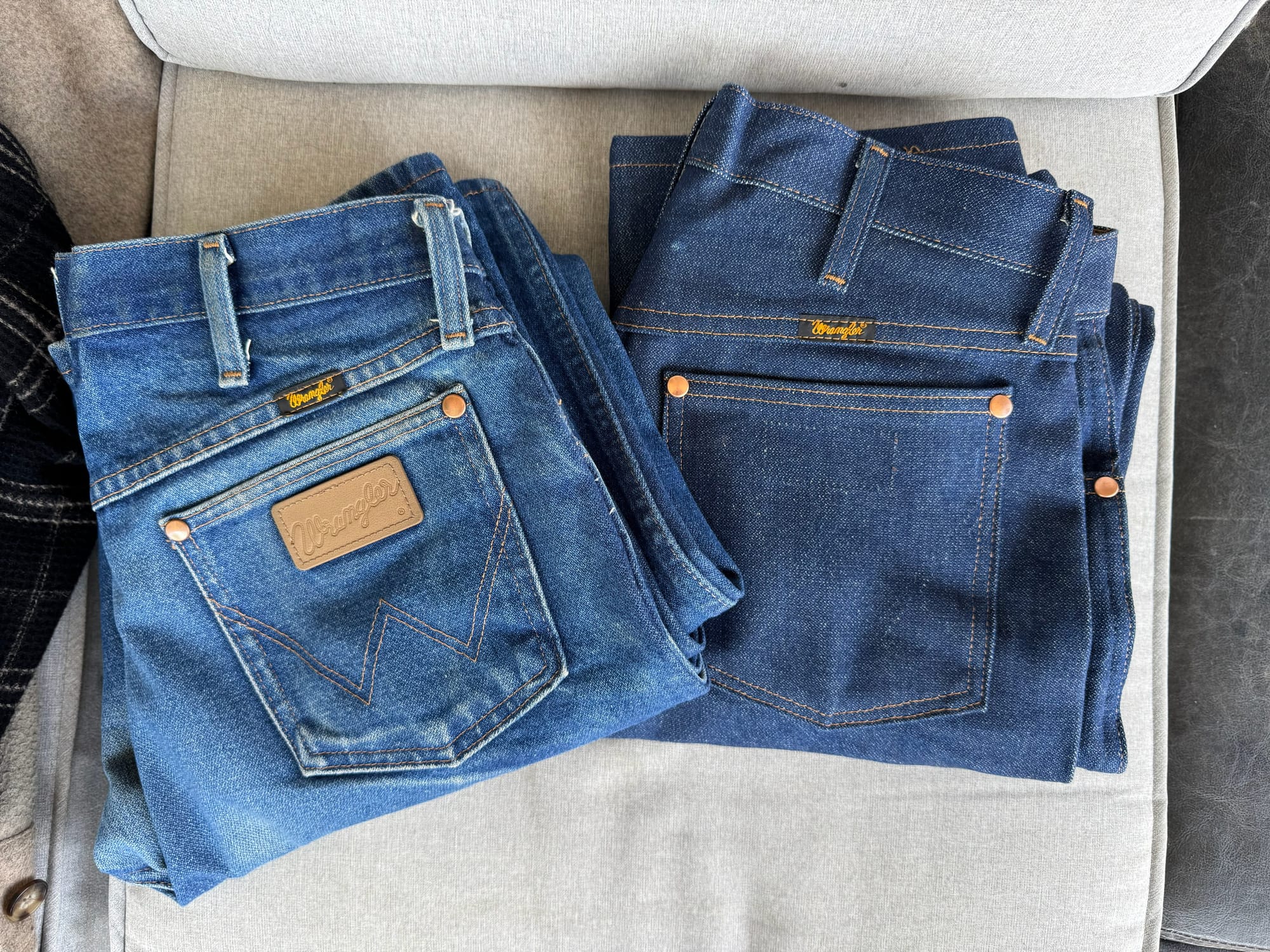
A brief history of the Wrangler 13MWZ
This pattern was developed with input from rodeo professionals and working cowboys, engineered around real-world needs:
- Sitting comfortably in a saddle for long hours (pattern + seams)
- Withstanding friction and stress (weight + broken twill)
- Maintaining structure over time, while conforming to your body
Wrangler's partnerships with rodeos and their athletes helped shape features like the higher rise, durable material, and functional pocket placement and sizing.
The jeans eventually became the official jean of organizations like the Professional Rodeo Cowboys Association (PRCA), cementing its role as a true hard-wearing, functional garment.
Material used in the Wrangler 13MWZ
One of the defining characteristics of this jean is its 100% cotton, broken twill weave.
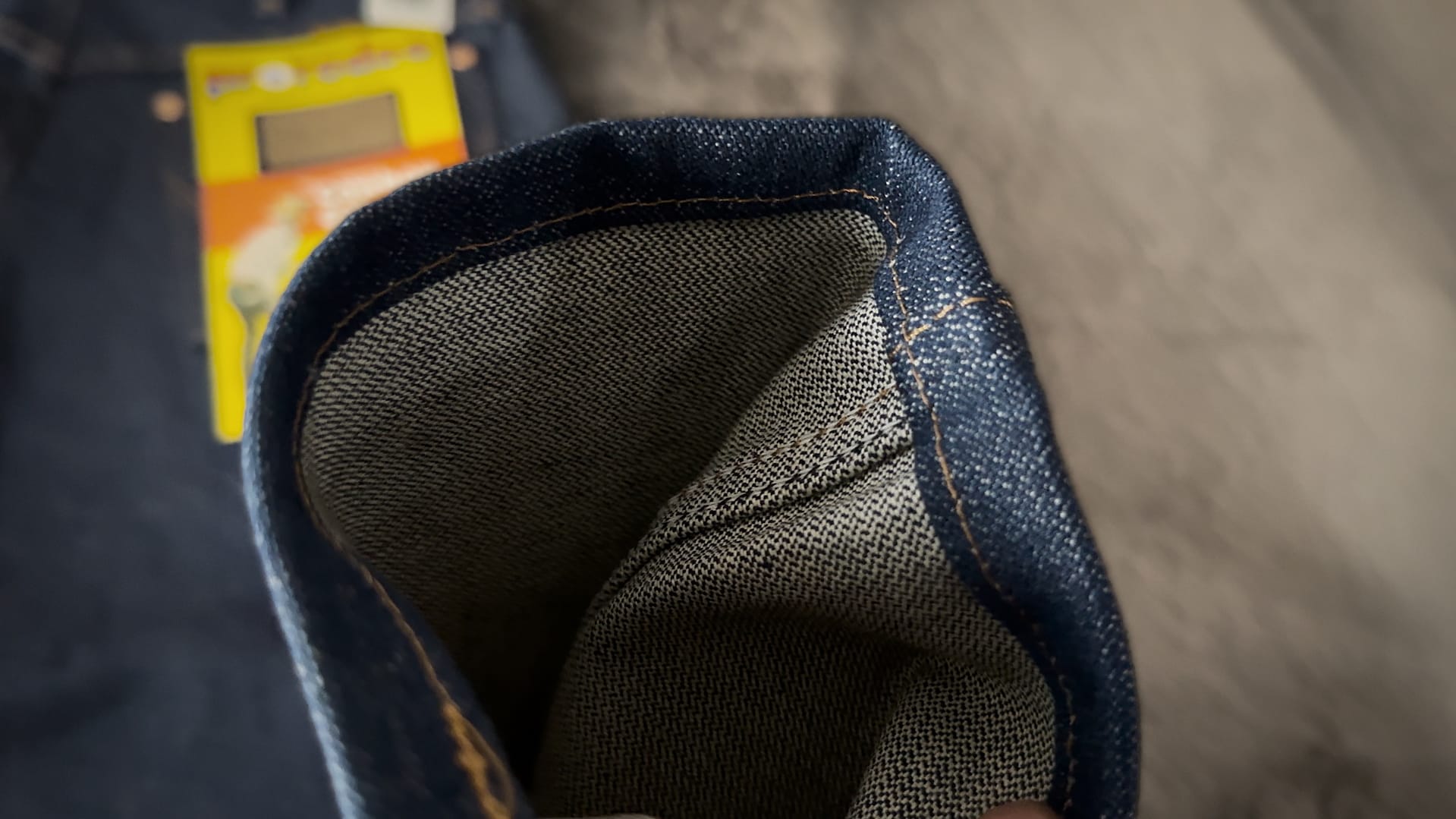
Broken twill construction
Unlike traditional right-hand or left-hand twill, broken twill alternates direction in a zig-zag pattern. This has a practical benefit:
- No visible leg-twist as the jeans shrink and break in
- Improves structural stability; can't just tear through, acts like a rip-stop
- Maintains a more consistent shape and drape over time
This is important in a workwear context, where jeans are subjected to repeated stress, and the aesthetic of no leg twist puts the Wrangler 13MWZ squarely into the functional fashion space.
Raw but sanforized denim (for a single model)
The most classic version of the 13MWZ is the "Rigid" model variant. This one is:
- Raw (not pre-washed for fades/looks out of the box)
- Sanforized (chemically pre-shrunk at the mill)
This combination often confuses people — even "raw denimheads", who are basically denim enthusiasts.
What it means is that the jeans can shrink a little bit if you introduce heat in your wash, and if you don't use low heat for the dryer cycle or line dry your jeans.
Expected shrinkage:
- Up to ~5% with hot wash + high heat dry cycles
- Less with cold wash and air drying
In practice, most people will see:
- Slight tightening in the waist and thighs
- Minor inseam reduction
This makes them more forgiving than unsanforized denim, but still capable of developing unique wear patterns and character over time, since they weren't pre-washed from the start.
The non-rigid variants (all of the others)
These should shrink no more than 1%, if even that. Expect no shrinkage at all. I've tested shrinking my shadow black cowboy cut jacket, and it had no discernable shrinkage.
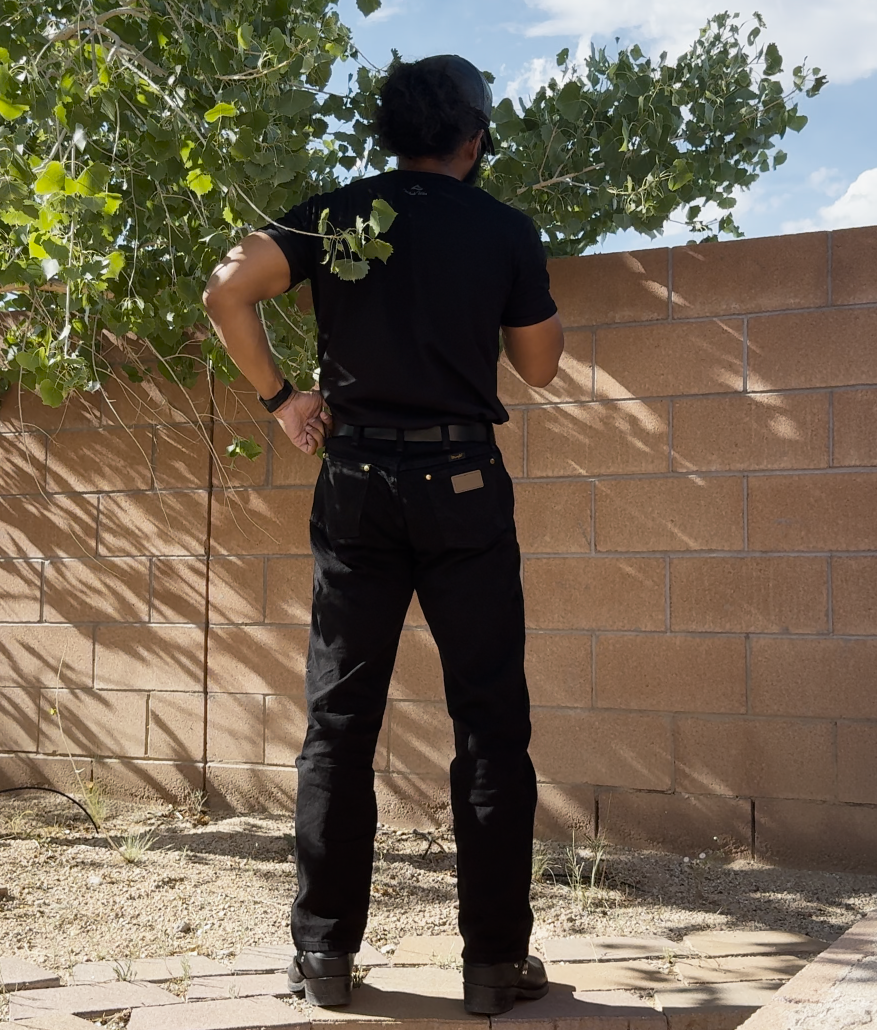
Shadow Black Wrangler 13MWZ
My black cowboy cut jeans when they were brand new. They've since had the patch cut off, and are now starting to fade nicely. Of course, "fading" on these deep black jeans won't look anything like the rigid variant.
Measurements
Wrangler recommends washing 3 times in hot water, likely to remove shrink and potential crocking of indigo onto furniture.
| Measurement | Before Wash | After 4 Washes & Dryer Runs | Change | % Change |
|---|---|---|---|---|
| Waist | 33.0" (83.8 cm) | 32.4" (82.3 cm) | -0.6" (-1.5 cm) | -1.82% |
| Inseam | 32.5" (82.5 cm) | 31.2" (79.2 cm) | -1.3" (-3.3 cm) | -4.00% |
| Thigh | 12.3" (31.2 cm) | 12.1" (30.7 cm) | -0.2" (-0.5 cm) | -1.63% |
| Knee | 9.25" (23.5 cm) | 9.1" (23.1 cm) | -0.15" (-0.4 cm) | -1.62% |
| Bottom Hem Opening | 8.5" (21.6 cm) | 8.2" (20.8 cm) | -0.3" (-0.8 cm) | -3.53% |
| Front Rise | 12.1" (30.7 cm) | 12.0" (30.4 cm) | -0.1" (-0.3 cm) | -0.83% |
| Back Rise | 16.0" (40.6 cm) | 15.8" (40.1 cm) | -0.2" (-0.5 cm) | -1.25% |
Above is size 32x32 measured after four hot machine washes followed by tumble drying.
While shrinkage percentages remain constant across all sizes, real-world user experience is different for larger sizes; losing a fixed percentage on a larger garment translates to shedding significantly more physical inches or centimeters of fabric. Percentages alone fail to capture this reality, which can drastically alter the final fit for larger frames.
The style of the Wrangler 13MWZ is functional and timeless
The jean fit is one of the main reasons it continues to remain relevant year after year.
- It has a classic mid-to-high rise, which depends on perspective, but I like to say they're the highest that a mid-rise jean can go before becoming a high-rise.
- It has a roomy seat for working-man's glutes, and ample thigh space.
- It has a straight leg opening, allowing for cowboy and roper boots to slip through without printing on the outside.
This is not a slim, tapered, or even flared jean. It's a jean that's designed for mobility, and for comfort while sitting and squatting.
It's a jean that's designed to last a work day, and then another one.
The Wrangler 13MWZ are a durable jean built for multi-purpose use
Durability is where the 13MWZ stands out most when you compare them to other jeans around the same price range (either stretchy crap, or thinner, lightweight denim).
Key construction features
- Heavyweight* denim (~14.75 oz range)
- Reinforced stress points with copper rivets and bartacking
- The outseam stitching seen on typical jeans is on the inseam here, creating less friction on the inner thighs and legs
Historically, based on what was being created in the 19th and 20th centuries, 15 ounce material would be quite heavy and unheard of.
They're still pretty much the best value jeans today
Typical pricing
- Rigid (raw) version: ~$30–$40
- Washed/color variants: ~$50–$60 (often discounted)
Not much else needs to be said there. When you look at the build quality alongside that small price tag, then look at any competitor within spitting range... wait, which competitor?
Rustler at Walmart.com? Wrangler owns that brand anyway, so it's not a good example to use.
I really can't think of any other jeans on the market, by a different company, that hold this value.
And despite the lower price, the Wrangler 13MWZ doesn't feel cheap. In fact, it feels utilitarian.
The 13MWZ's role in heritage and functional fashion
These jeans have gained a strong following in these areas over the years:
- Heritage & Americana-leaning fashion communities
- Workwear & "buy-it-for-life" enthusiasts
- Everyday guys (and women) that want to look better and dress better
It just seems to resonate, because of its:
- authenticity
- it's not a reproduction or reinterpretation
- it's the same model worn and sold for decades
- accessibility
- it has a low cost of entry
- it is widely available around the country, in Mexico and Caada (although a little pricier internationally)
- function-first design
- it prioritizes use over aesthetics, yet has both
- it still looks appropriate in modern styling, no matter how cyclical fashion can get
How the Wrangler 13MWZ compares to modern denim expectations
Modern consumers often look for stretch fabrics, slim fits, and lightweight materials for comfort.
The 13MWZ deliberately avoids these, because it was made at a time where those comforts were really only found in homes and not where people wore jeans (excluding stretchy fabrics — those came later on).
Tradeoffs for those types of consumers
Pros:
- Structure, Longevity, Authentic wear patterns
Cons:
- Stiffer break-in, Less immediate comfort, Less "tailored" look, particularly if the cut is roomy for your legs
For those coming from stretch denim, the Wranger 13MWZ can feel super rigid at first. Over time, however, it molds to the wearer in a way that synthetic blends just cannot replicate.
Final perspective, and to wrap things up
Boy I yapped a lot about a pair of jeans, huh.
But I think that's because I appreciate Wrangler and the 13MWZ; it isn't trying to compete with premium denim brands, or fashion labels, or even market through celebrity endorsement. Its value and strength of marketing comes from:
- its purpose-built design
- its proven durability
- its consistent production over decades
- its extremely accessible pricing
This is one of the few jeans that can legitimately claim both historical continuity and modern relevance.
Watch the entire Wrangler 13MWZ playlist
Instead of reading 1500+ words, kick back and relax with this playlist. Let it autoplay as you learn about one of the most valuable pairs of jeans ever created.
With somewhat of an ASMR take, I try to keeping things chill, soulful, and sometimes with a dash of humor.
Be sure to navigate the playlist — this video is when I got the Shadow Black 13MWZ
More about Wrangler
For readers interested in the broader context of Wrangler as a company—its history, positioning, and other models—reference your existing brand page:
 Bryan
Bryan
What are some alternatives to the 13MWZ?
Now, the 936DEN slim fit is a good option for people that don't need as much room in the thighs — it's basically the alternative to a slimmer version of the 13MWZ.
On the other hand, the 31MWZ (see the number swap?) are the relaxed fit version of these jeans, for those with extra-large legs. I typically size up in the waist for the 13MWZ, but I definitely would not with the 31MWZ jeans.
Regardless of price point, or the specific cut between these models, the cowboy cut reigns supreme.